Know what's happening on your floor.
Real visibility into production, inventory, and delivery — without adding more work for anybody.
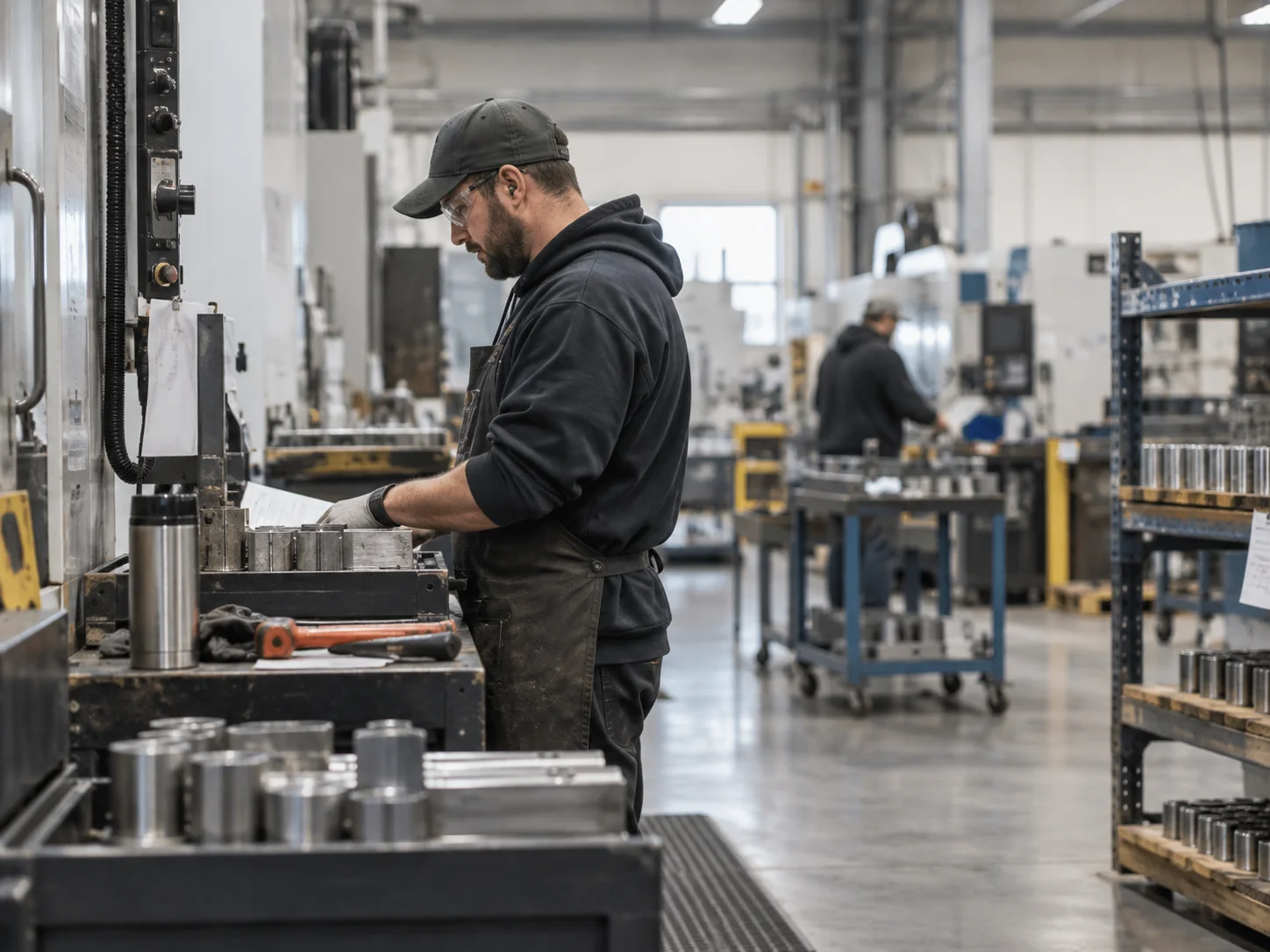
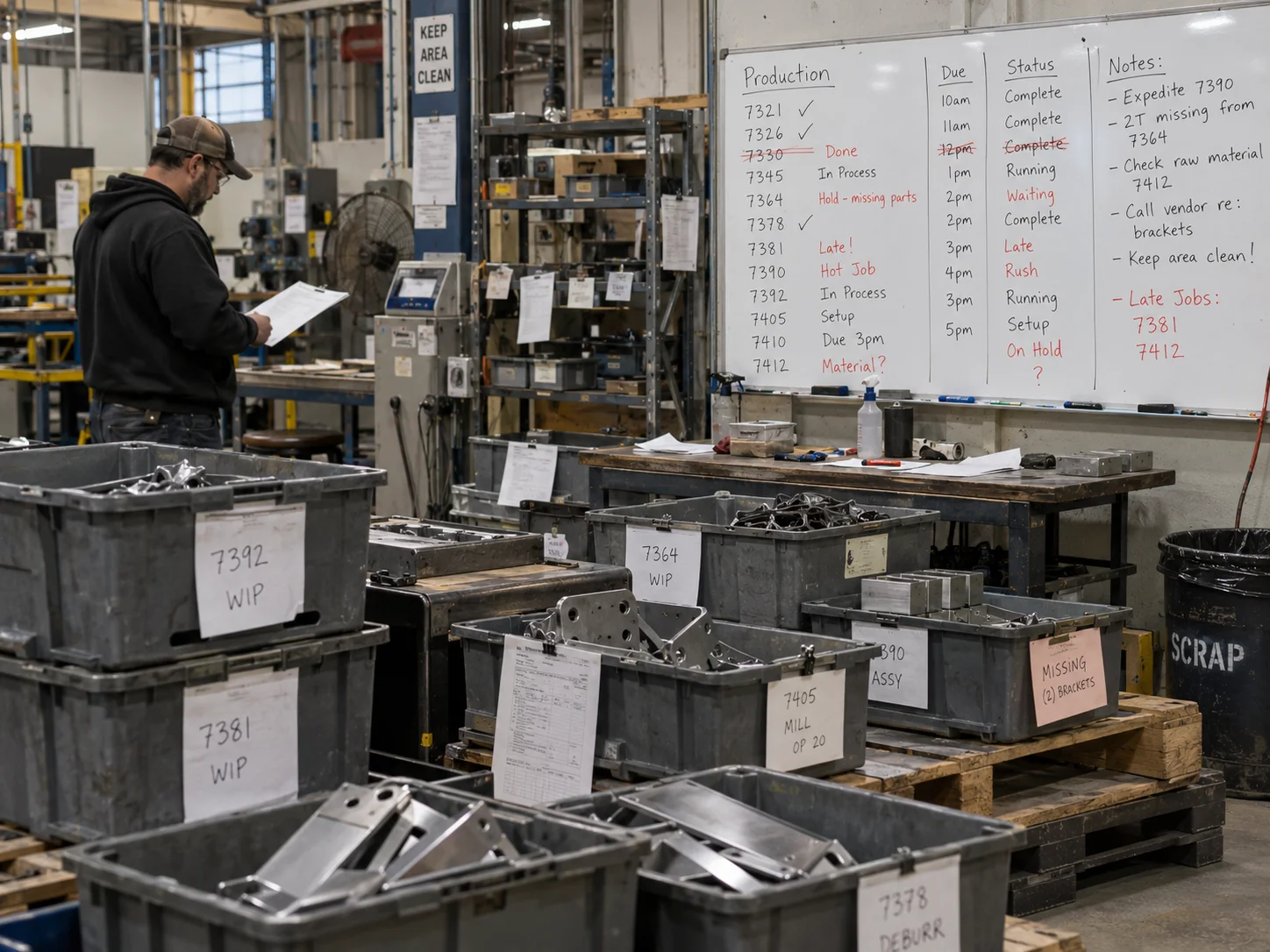
If hard work was going to fix this, it would have already worked.
You used to walk the floor and know where things stood. Somewhere along the way, that got harder — more systems, more software, more reports, somehow less clarity.
So you guess, and you try to fix it the hard way: THIS time we'll actually keep the whiteboard updated. THIS time the data gets entered at the end of the shift. It never quite sticks — not because anyone's not working hard enough. The information just isn't there when you need it.
More visibility. Not more work.
01
Production status
Know where every job actually stands, right now — not from a report someone filled out at the end of the shift.
02
Stock you can trust
Counts that match what's actually on the shelf, not what the spreadsheet says it should be.
03
Delivery dates that hold
Estimates built off what's really happening on the floor, so the date you give a customer is one you can keep.
None of this means more busywork for your operators.
The solution has to fit how your floor already runs, or it doesn't go in.
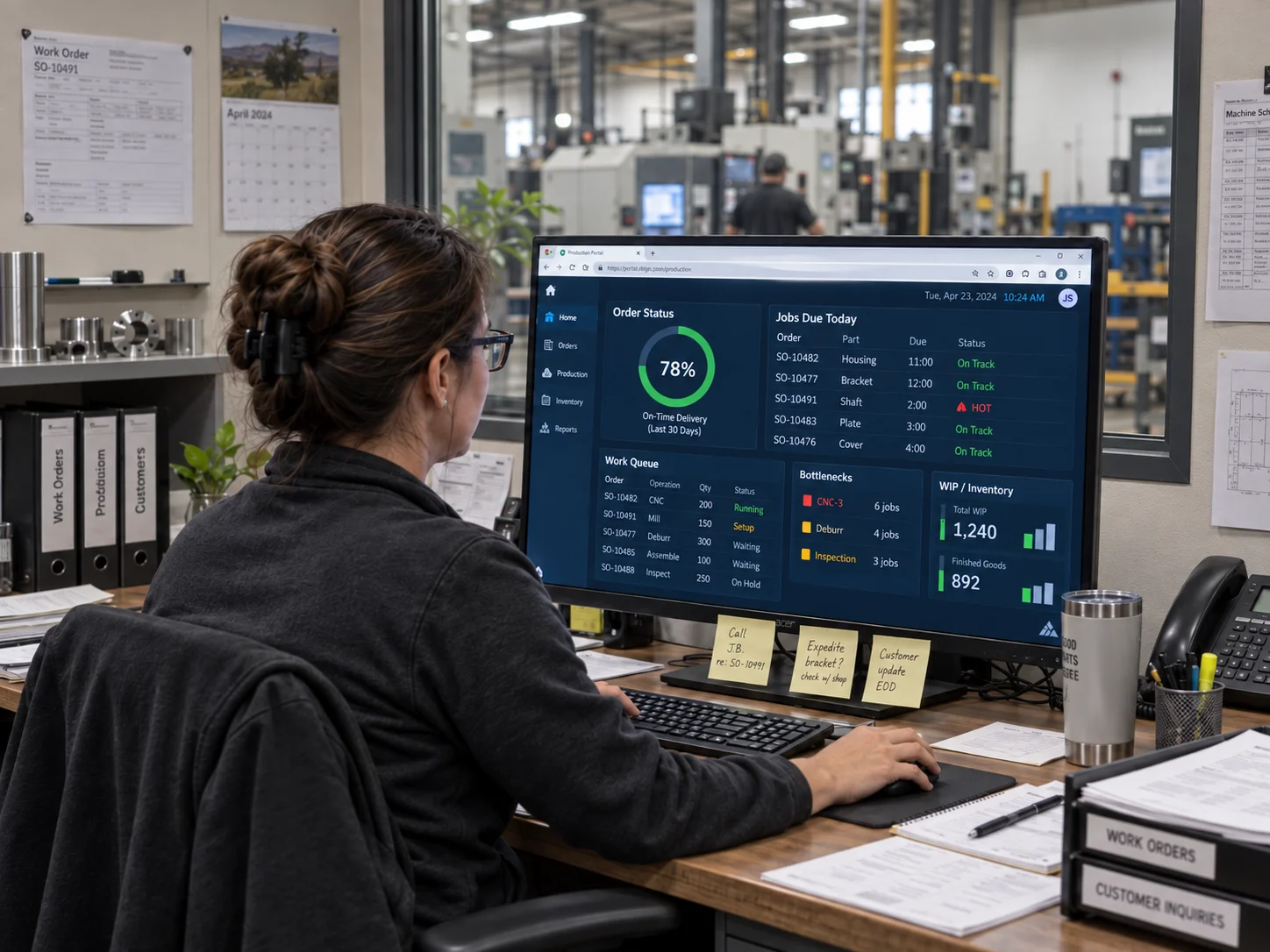
Here's what that looks like on your floor.
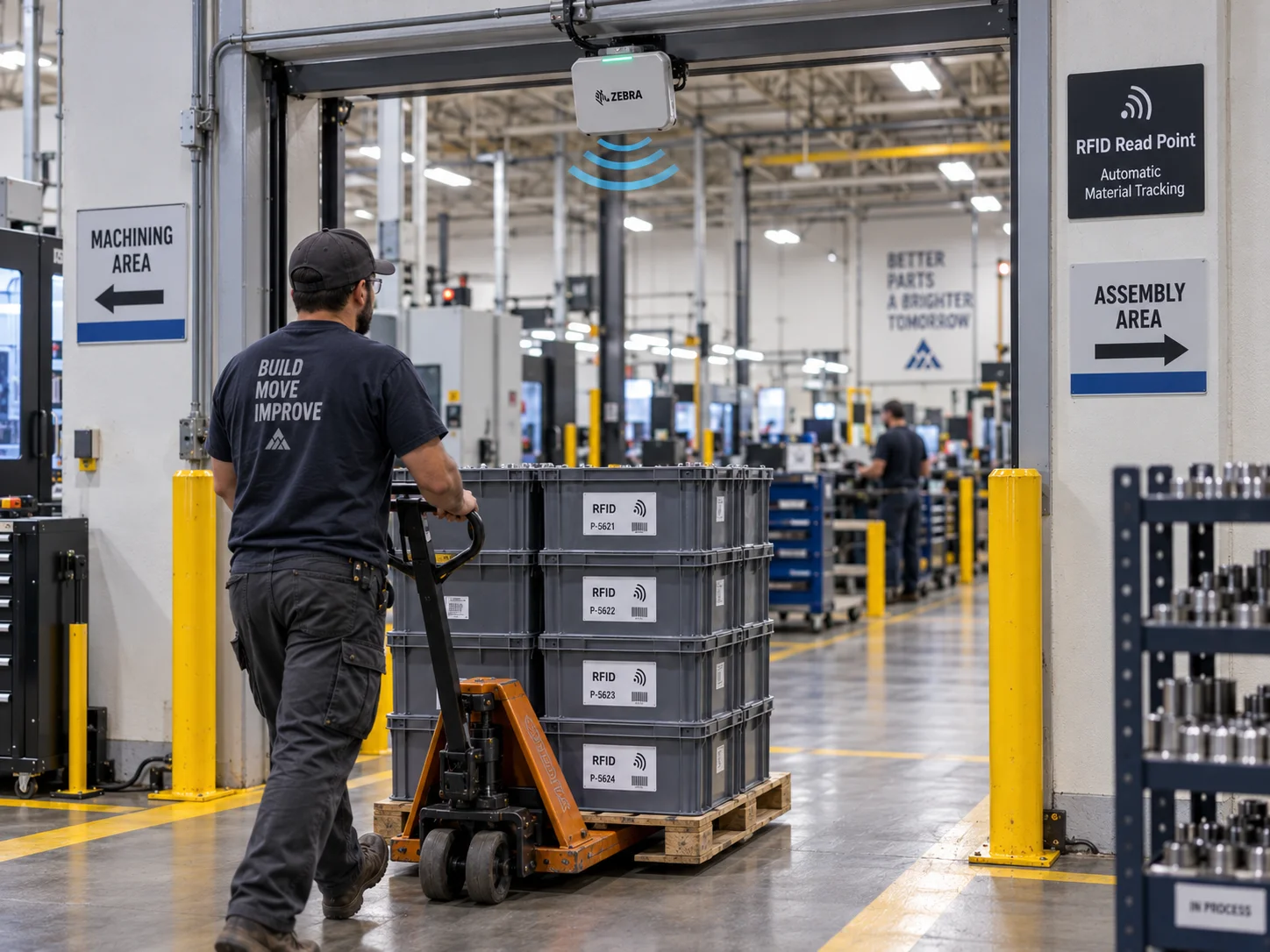
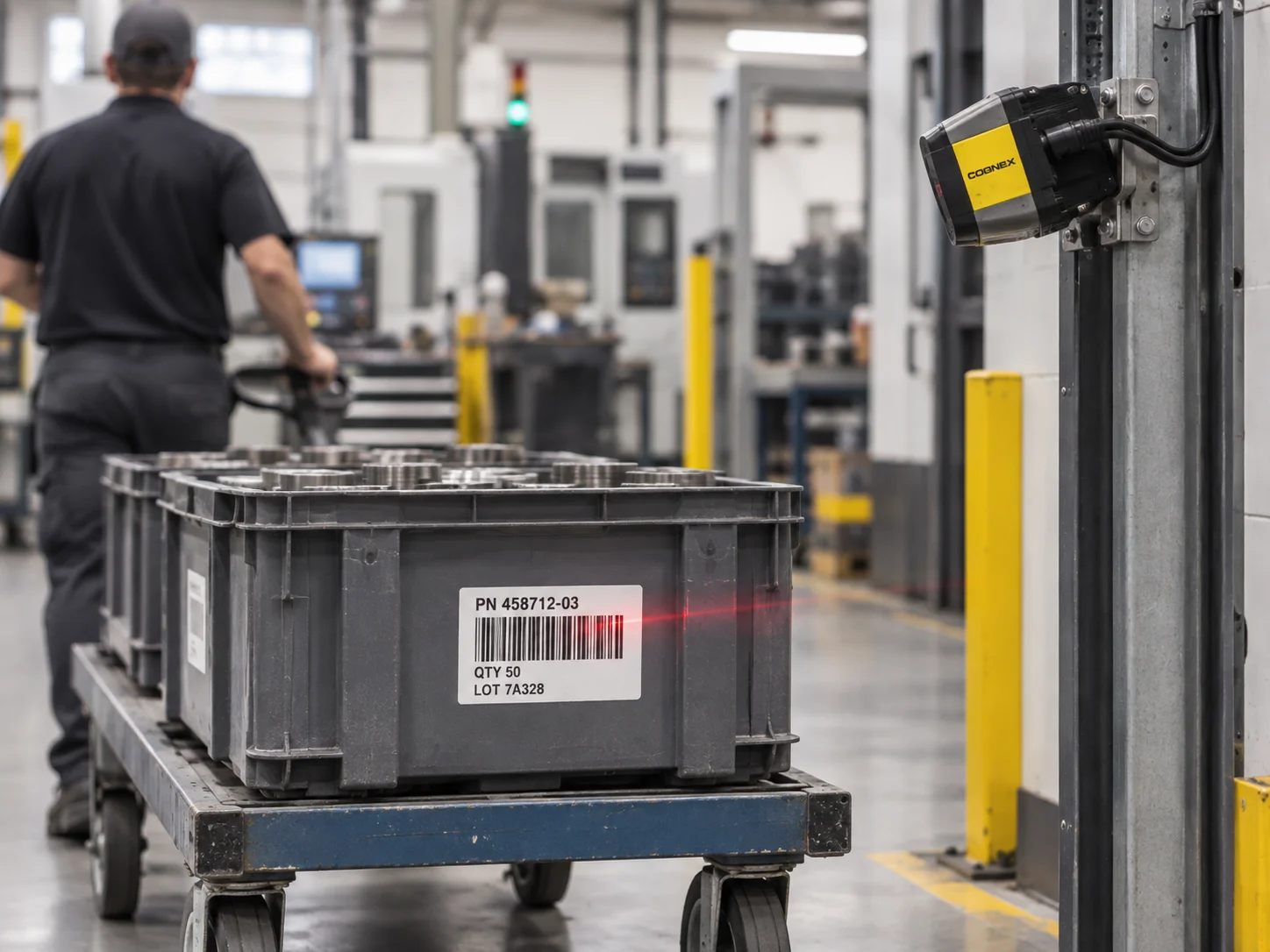
Nobody enters anything or changes how they work — this updates on its own, the same information everyone already relies on, just accurate instead of guessed at.
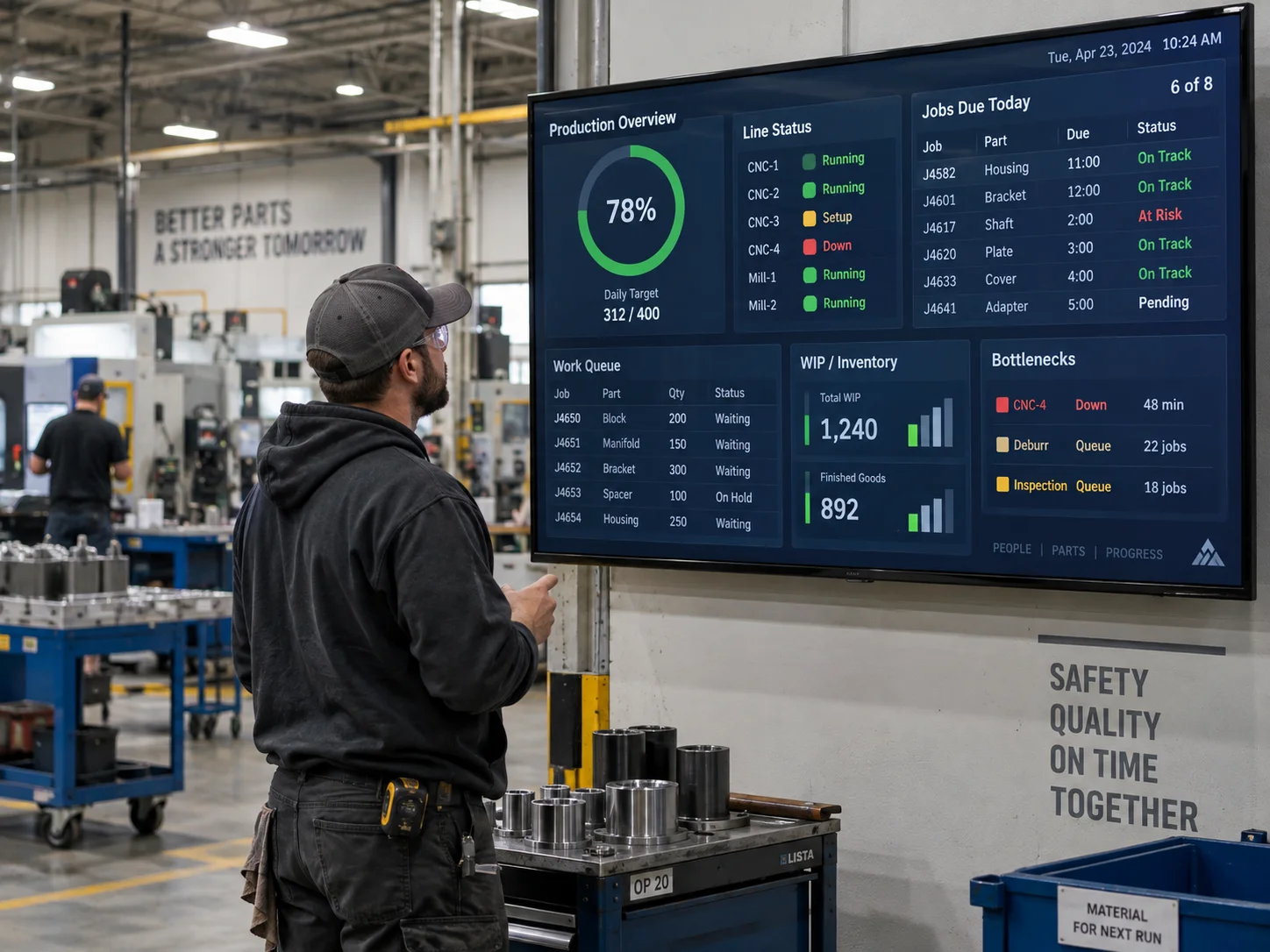
High-tech where it helps. Low-tech everywhere else.
Some of it is sensors and RFID tags that log automatically. Some of it is a clipboard and a whiteboard, because that's what's fastest for that step. The mix is different in every plant — the constant is that it's built around how your floor already works, not the other way around.
If it doesn't fit the way your people already work, it doesn't go in.
Ready to see what's actually happening?
Tell me about your shop. I'll get back to you directly — or email me at [email protected].